A lot of weeknight food misses the mark for a pretty simple reason: everything goes into the pan at roughly the same time, cooks at the same intensity, and lands on the plate tasting like one flat note. That is often what people mean when they say home cooking does not taste as polished as restaurant food. The gap usually is not truffle oil, better cookware, or pricier meat. It is sequence. High-heat browning creates deeper roasted flavor, and briefly blooming spices in fat helps release aromatic oils before liquid dulls them. (Illinois Extension)
After learning how to layer flavours, using inexpensive kitchen staples like rice, beans, chicken thighs, eggs and pasta should no longer feel like just that – staples. All of these foods now become something much more than basic “backup” foods. With each piece of your meal serving its own purpose (depth, aroma, taste, texture and overall presentation), your grocery budget is not only saved but is also helping you avoid trying to fix a technique-related cooking problem by adding more things to your cooking arsenal.
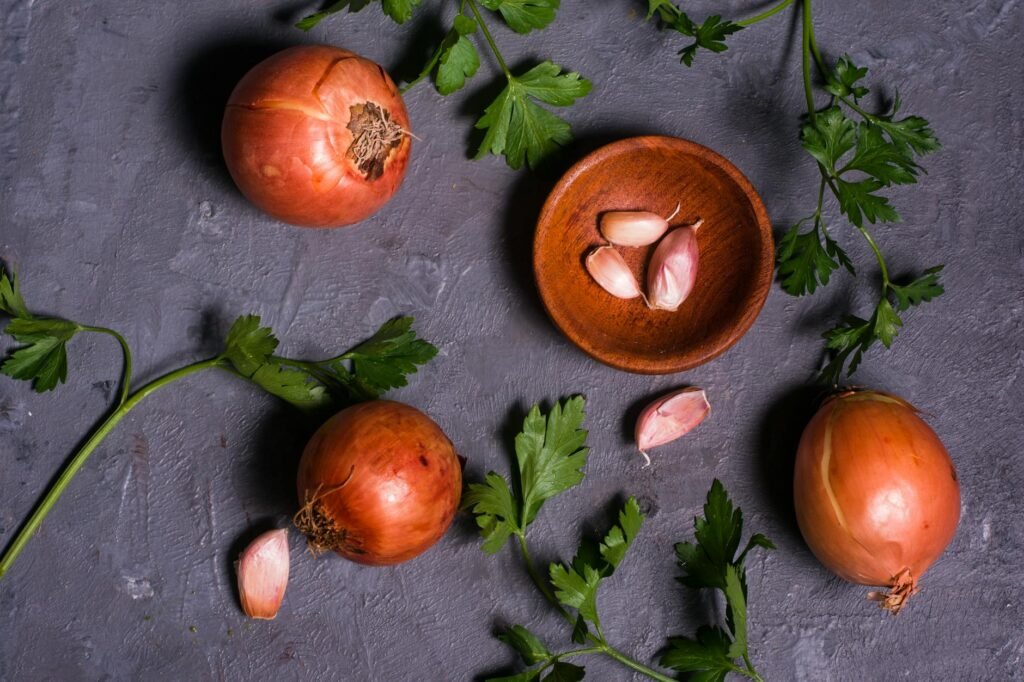
TL;DR
- Food tastes more expensive when it has depth at the bottom and brightness at the end.
- Use the PRICE method: Pan browning, Released aromatics, Inner savoriness, Contrast, End note.
- Before you add more cheese, cream, or meat, fix the cheapest missing layer first.
- Small finishing ingredients like lemon, parsley, vinegar, black pepper, yogurt, or toasted breadcrumbs often do more than another $6 to $10 of groceries.
- If a meat dish looks brown, do not assume it is safely cooked. For ground beef, color is not a reliable doneness test. (USDA FSIS)
Why simple food tastes flat
Bland dinners aren’t generally caused by low seasoning; they tend to be lacking in structure. In this case, the onion was softened but not caramelized, the garlic went in too soon and became harsh and the dried herbs were boiled for too long and went away. The sauce was salty but not rich. The dish is finished because shredded cheese was added at the end.
High-priced items frequently contain 3 characteristics working within the same meal. Concentration is the first of these characteristics; food has been browned, reduced, toasted or otherwise intentionally darkened before serving; this adds a concentrated flavour to the dish. The second is contrast to the concentrated flavour; there are acids, heat, bitterness, crunchy items and/or fresh items that can balance out the concentrated flavour. The third is how different the dish’s flavour is at the end with respect to what has been added to it, such as an herb, pepper, citrus juice, oil, butter, yogurt, crumbs, etc.
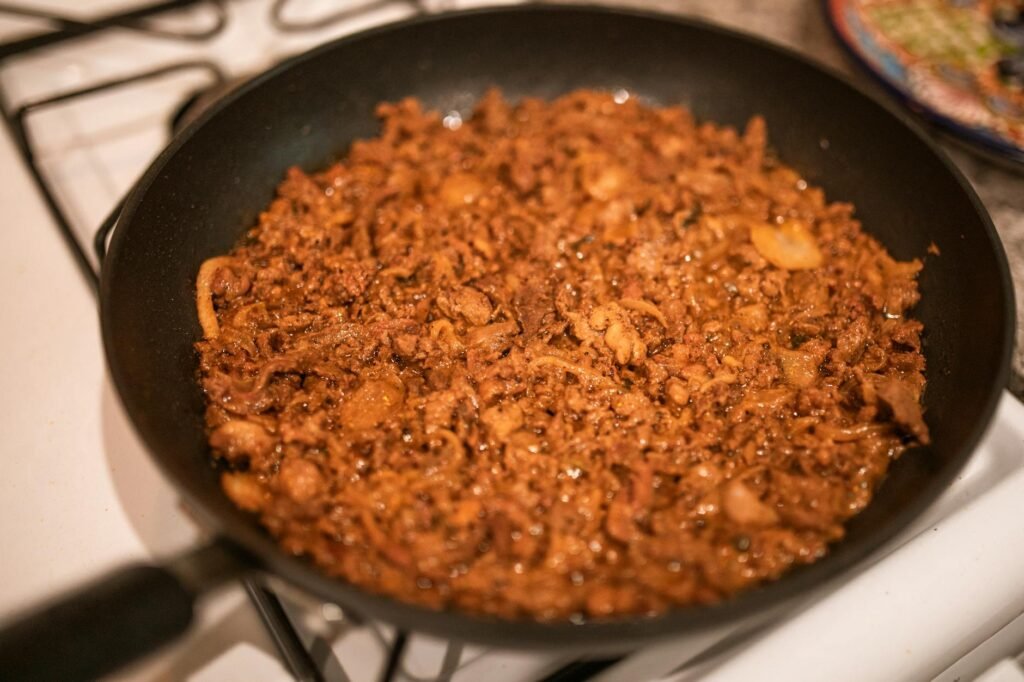
The reason this matters is simple chemistry. The Maillard reaction, which helps create browned flavor, depends on heat, time, and lower surface moisture. If you crowd the pan or rush the sear, you trade flavor-building browning for steaming. (Illinois Extension)
Use the PRICE method before you spend more money
Be sure to use this quick test, the PRICE method, prior to purchasing any better protein, special jarred sauce, or an additional type of specialty ingredient. Score each letter of your word up to 1 point.4 or 5 points normally indicate that your dish is complete.2 or 3 points indicate that you’ll likely have to add some sort of component to fix what is missing from the dish;however, 0-1 point mean you should return to the dish and rebuild it properly using flavor in the correct order instead of randomly just adding other ingredients.
- P = Pan browning. At least one ingredient should have real color: onions, tomato paste, mushrooms, chicken skin, sausage, broccoli, breadcrumbs, or chickpeas.
- R = Released aromatics. Onion, garlic, ginger, shallot, scallions, or spices need a brief, intentional stage in oil or butter.
- I = Inner savoriness. This is the bass note: salt in layers plus one savory bridge such as soy sauce, miso, anchovy, tomato paste, bouillon, mushrooms, Parmesan rind, or Worcestershire.
- C = Contrast. Add one thing that cuts through sameness: lemon, vinegar, chili, bitter greens, yogurt, pickled onions, or toasted nuts.
- E = End note. Finish the dish off heat with something fresh or volatile: herbs, zest, black pepper, good olive oil, butter, scallions, or grated cheese.
The money-saving principles are quite easy. If a meal receives a 3 or lower, do not upgrade the main ingredient at this time. Fixing the missing ingredient should come first with a cheaper alternative. For instance, using tomato paste to fix your missing layer is much less expensive than purchasing better ground meat. Using lemon and parsley is also cheaper than ordering in takeout because your sauce for the pasta does not have enough flavour. Another example would be using toasted breadcrumbs to create the illusion of luxury over another half-pound of protein.
If dinner tastes off, do this next
| If it tastes like this | What is probably missing | Fast fix | What not to do |
|---|---|---|---|
| Bland and thin | Pan browning or inner savoriness | Brown the next ingredient harder, darken tomato paste, or add a small savory bridge like soy, bouillon, or Parmesan | Do not dump in more random cheese first |
| Heavy and muddy | Contrast or end note | Add lemon, vinegar, herbs, black pepper, yogurt, or a crunchy topping | Do not add more butter before tasting |
| Sharp or raw-spiced | Released aromatics | Bloom garlic or spices briefly in fat, or cook onions longer before adding liquid | Do not add extra raw garlic or more dry spice on top |
| Salty but still boring | A missing flavor layer, not more salt | Add browning, acid, or a fresh finish | Do not keep salting |
| Watery | Concentration | Reduce uncovered, remove ingredients that are done, or add toasted crumbs or nuts for texture | Do not try to fix everything with lemon |
| Dry protein | Texture problem more than a flavor problem | Slice thin, add sauce, serve over rice or yogurt, or repurpose into soup or tacos | Do not keep cooking it |
A realistic $8.58 example
Take a four-serving chickpea tomato pasta built from ordinary grocery-store items: 1 pound of pasta for $1.49, two cans of chickpeas for $2.18, one onion for $0.79, garlic for $0.28, two tablespoons of tomato paste for about $0.60, one lemon for $0.69, two ounces of Parmesan for about $1.25, half a bunch of parsley for $0.80, and about $0.50 in oil and chili flakes. Total: roughly $8.58, or about $2.15 a serving. Prices vary by store, but the point is practical: the gap between a forgettable pantry dinner and one that feels worth repeating is often technique, not another $10 in groceries.
You can easily visualize the unstructured version of this dish. You will soften onions, toss in garlic, add some diced tomatoes or pasta water and stir in the chickpeas; then boil it all together and add cheese on top. This is fine. However, in the layered version, thi8s presents a premium product due to the caramelizing of the onions, the darkening and sweetening of the tomato paste upon cooking, the blooming of the chili flakes (by way of their release into the oil), finishing the pasta in the sauce, and the addition of fresh lemon zest, fresh parsley, freshly cracked black pepper, and a small amount of freshly grated Parm cheese just before service – all with the same pantry supplies and the same basic grocery list; entirely different outcomes!
How to layer flavor without turning dinner into a project
This works best when you treat flavor like stages, not a pile. Oregon State Extension notes that toasting or blooming spices helps release volatile oils and fuller flavor, and that whole spices generally keep their quality longer than ground spices. (Oregon State Extension)
- Start dry and uncrowded. Pat wet ingredients dry, heat the pan first, and leave enough space for moisture to escape.
- Brown before you stir. Let onions go beyond translucent. Let mushrooms or chickpeas sit long enough to take color. Let tomato paste cook until it turns a deeper brick red.
- Add aromatics after the browning base is established. Garlic, ginger, scallions, cumin, curry powder, and chili flakes need a short bloom in fat, not a long simmer in liquid.
- Choose one savory bridge. Tomato paste, soy sauce, miso, anchovy, bouillon, Worcestershire, mushrooms, or Parmesan rind can give the middle of the dish depth.
- Salt in passes, not just at the end. Season the base, taste the liquid, then taste again after the main ingredient cooks.
- Finish off heat. Use lemon zest, vinegar, chopped herbs, black pepper, yogurt, olive oil, butter, toasted breadcrumbs, or grated cheese to create the final polished note.
A final touch can really help a dish shine. Many home-cooked dishes fail to take this finishing touch into account, whereas restaurants not only prepare the dish but often put that finishing touch on it as well. For example, adding a dollop of plain yogurt to lentils; squeezing some lemon on roasted broccoli; sprinkling some chopped scallions on fried rice and adding a handful of toasted breadcrumbs on pasta can alter the taste and texture of a meal for less than $1 each.
Common mistakes that make food taste cheaper than it is
- Crowding the pan, then wondering why nothing tastes roasted.
- Adding garlic at the same time as onions over high heat and burning its flavor before the dish even starts.
- Using acid like a rescue hose. A little lemon or vinegar sharpens a dish. Too much makes it thin and one-note.
- Trying to fix missing browning with extra salt.
- Buying another ingredient instead of replacing stale spices. Fresher spices, especially if bought whole and ground as needed, often improve flavor more than brand prestige. (Oregon State Extension)
- Treating brown color as a food-safety test. Ground beef can look brown before it reaches a safe temperature, and it can stay pink after it is safe. Use a thermometer. (USDA FSIS)
When flavor layering still is not enough
While technique can provide some assistance, it cannot provide a complete rescue for a poor-textured item like overcooked chicken, which will still be dry, or a watery zucchini, which will require concentration to reduce its moisture content. A mealy bean may be better presented either mashed as soup or spread than as a clean, intact product. In short, while layering flavors is effective, it is not all that effective once you have mismanaged an ingredient’s texture.
Having a small backup kit can make a difference in a speedy way because it gives you different kinds of ingredients for those times when the main dish doesn’t turn out as expected. Store something acidic such as lemon or red wine vinegar; something fresh such as parsley or scallions; something crunchy such as toasted breadcrumbs or nuts; and something savoury such as tomato paste or soy sauce in the kit. Then, if you have to make up for an ingredient in the main dish, you can do so in less than 5 minutes!
Warning: Acid adds flavor, not food safety. Marinades can tenderize and season, but they should not be relied on to kill bacteria. Also, homemade garlic-in-oil or chili-oil mixtures need careful refrigeration because improperly stored oil mixtures can support botulism risk. (Illinois Extension)
If a meal has excess salt, do not continue to try to fix it with additional acidity and/or fat. You may be able to dilute the flavor of excess sodium using unsalted products such as beans, potatoes, rice, pasta water or broth and taste it again after diluting. On the other hand, if something is too acidic, add either fats, starch or dairy elements before attempting to use sugar to offset the acidity. The goal is not to mask the problem; instead, you are seeking to discover what part of the meal has an imbalance in flavor.
How to pressure-test the method on your own stove
To determine if layering flavors is successful the best way is by doing a controlled experiment by saving a spoonful of everything before adding your final finish and checking on that spoonful after adding just one additional layer to the original spoonful to see if there’s a noticeable change will give you evidence of where that bottleneck was. This method is far more effective than adding 3 additional ingredients and hoping that at least one of the three will work.
- Take a pre-finish bite and a finished bite side by side.
- Write down which PRICE letter was missing.
- Notice whether the meal improved more from depth, contrast, or finish.
- Taste leftovers the next day. If the flavor collapses when reheated, you probably relied too heavily on salt or spice and not enough on browning or savoriness.
- Refrigerate leftovers promptly and plan to use refrigerated leftovers within 3 to 4 days. (USDA FSIS)
The bottom line
Home cooked food can seem quite expensive if you do them correctly – Step 1: Brown Your Meats, Step 2: Add Aromatics, Step 3: Add A Little Savoriness, Step 4: Add Your Contrast (last minute item) – a Fresh Finish Last. Prior to spending any money on more expensive products, use the PRICE test. Weeknight meals would taste much better if they were sequenced properly than having a much higher grocery bill.
FAQ
Is flavor layering just another name for adding more salt?
Salt is important, and while you can have a properly salted plate of food, the dish still will dull your taste because there is a lack of browning, lack of aroma, lack of contrast and lack of final finishing. So if you add more salt to an underbrowned dish, it will most likely just become saltier.
What is the cheapest single upgrade if my dinner tastes boring?
The missing aspect dictates the fixing of recipes. You can achieve depth by adding inexpensive ingredients such as tomato paste or soy sauce, and by adding contrast with lemon, vinegar and yogurt. To provide finishing touches to dishes such as parsley, scallions, pepper and toasted breadcrumbs. Fix the missing layer first; do not buy ingredients at random until you have solved this issue.
Can this method work for vegetarian meals?
Indeed, beans, lentils, mushrooms, tofu, eggs, pasta, potatoes, and roasted vegetables can benefit quite nicely from the use of browning and a sharp “sour” or “acidic” glaze. They rely on that to bring out the savory-ness and make the meal more interesting. In addition, adding a little bit of browning at the end will make those meatless meals taste very dense, juicy, and flavorful.
When should acid go in?
Usually in small amounts near the end, when you can taste and stop. Some dishes build flavor with wine or tomatoes early, but the bright, expensive-tasting lift usually comes from the final adjustment.
Why does my food get brown but still taste one-note?
Browning of food can be just a part of how it will taste once you eat an ingredient. This means that if there is no acid, seasoning herbs, pepper, etc, added to the dish while cooking it in a pan, you could end up with a very heavy and unbalanced meal, despite the fact that the food has been well cooked using the browning process.
Can I keep homemade garlic oil on the counter for finishing meals?
That is not a good idea. Garlic-in-oil mixtures need careful refrigeration and safe handling because improperly stored oil mixtures can support botulism risk. If you make them at home, treat them as perishable. (USDA FSIS)
References
- Illinois Extension: Maillard reactions change the tastes of your food – https://extension.illinois.edu/blogs/simply-nutritious-quick-and-delicious/2021-11-19-maillard-reactions-change-tastes-your-food
- Oregon State University Extension: FCH14-04 Leader’s Guide, Spices of India – https://extension.oregonstate.edu/sites/default/files/documents/8836/fch1404leaderguidespicesofindia.pdf
- USDA FSIS: Color of Cooked Ground Beef as It Relates to Doneness – https://www.fsis.usda.gov/food-safety/safe-food-handling-and-preparation/meat-fish/color-cooked-ground-beef-it-relates
- USDA FSIS: Leftovers and Food Safety – https://www.fsis.usda.gov/food-safety/safe-food-handling-and-preparation/food-safety-basics/leftovers-and-food-safety
- Illinois Extension: Marinating – https://extension.illinois.edu/meat-safety/marinating
- USDA FSIS: Clostridium botulinum & Botulism – https://www.fsis.usda.gov/food-safety/foodborne-illness-and-disease/illnesses-and-pathogens/botulism
- University of Minnesota Extension: Chili oil and oil-based products – https://extension.umn.edu/cottage-food-connection/chili-oil-and-oil-based-products